Creative testing guide
SaaS ad hooks: how to test the opening without changing the whole ad
A hook is the first argument an ad makes for your attention. Changing a caption while leaving the visual opening untouched is usually a cosmetic variation. Changing the hook means changing what the viewer encounters first: the future they want, the thing they will see, or the problem they recognise.
You can learn more from three meaningfully different openings when they converge on the same body. The shared body reduces creative noise, so the test is closer to a comparison of premises rather than three unrelated ads. It still does not guarantee a winner: audience, delivery, placement and chance all affect the result.
See the thinking in motion.
Self-directed concepts for fictional brands. Each film includes a breakdown of the creative choices.
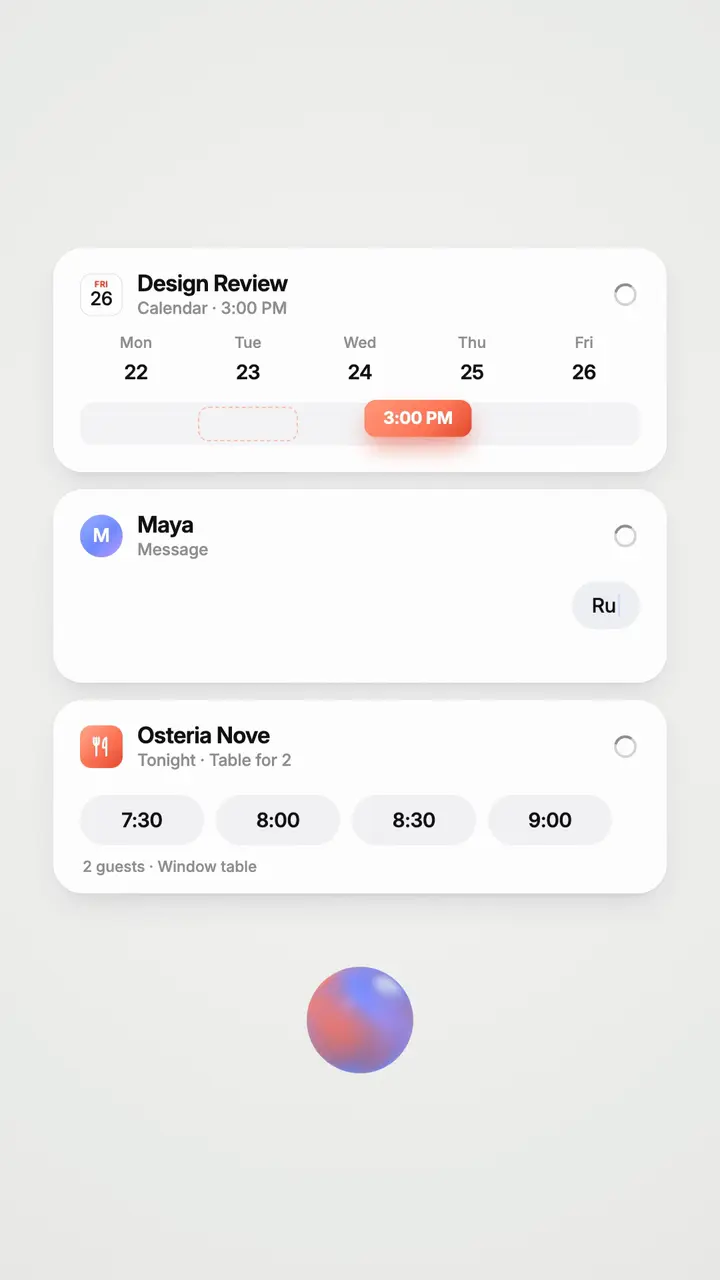
Watch three openings of our own ad.
Hook A · Aspiration
Your next ad could look like this.
Hook B · The deliverable
Which opening would stop you?
Hook C · The problem
Still selling your app with screenshots?
Three silent opening treatments, designed to lead into the same film after 0:03. These are creative hypotheses; no winning variant or campaign result is claimed.
Three premises for one film
Motionwisp’s own launch ad uses three openings. Hook A is aspirational: “Your next ad could look like this.” Hook B leads with the deliverable and a question: “Which opening would stop you?” Hook C names the problem: “Still selling your app with screenshots?” All three converge on the same film at about three seconds.
These are real creative variations of our own ad, included to show the method. They are not evidence that one premise performs best. Until comparable distribution produces enough observations, A, B and C are hypotheses.
| Hook | Premise | What it asks the viewer to recognise |
|---|---|---|
| A | Aspiration | A higher visual standard for the next ad |
| B | Deliverable | The value of comparing distinct openings |
| C | Problem | The limitation of selling an app with static screens |
Design the comparison before launch
Start with one question, such as which premise earns qualified attention from a defined audience. Keep the approved body, destination, offer and core claim consistent. Use the same placement and audience rules where the platform allows it, and run the variants during the same period. If one hook gets a different audience, budget pattern or landing page, the comparison answers several questions at once.
Decide the primary measure in advance. A very short view can help diagnose immediate stopping power; a later view or click can show whether the opening attracts people who remain interested. A hook that produces cheap starts but poor continuation may be creating curiosity the body cannot repay. For a commercial campaign, qualified enquiries matter more than an isolated engagement rate.
Keep the test interpretable
- Change the opening premise and its necessary visuals; keep the body of the film the same.
- Use the same destination, offer and conversion definition for all three versions.
- Compare like placements and audiences over overlapping dates.
- Let delivery gather enough observations before reacting to an early swing.
- Record what actually differed so the next round builds on a clear hypothesis.
Read the result as a decision, not a verdict
A strong result says that one opening worked better under those conditions. It does not prove a universal truth about “problem hooks” or your entire market. Look for the point where behaviour separates. If the variants differ immediately and then retain viewers similarly, the premise may be doing the work. If they start similarly but diverge after the convergence, inspect whether the opening set an expectation the body did or did not fulfil.
Also examine the size of the difference and the amount of data behind it. Tiny differences can reverse as delivery changes. If the practical outcome is close, keep more than one version available and test a larger strategic change next: a different product moment, audience or offer.
Turn a result into the next creative round
Translate the outcome into a sentence you can challenge. For example: “For this audience, naming the screenshot problem earned more qualified visits than leading with the visual aspiration.” The next test can then probe the claim with a new execution while keeping the successful premise, or keep the execution and challenge the premise with a new audience.
The purpose of three hooks is not to decorate one ad with alternatives. It is to make the opening an explicit creative decision, ship useful variants efficiently, and give the next production a better question.
The pilot
One product moment. Three ways in.
A 15–30 second concept, three distinct opening hooks, three vertical films. Tell us what you are launching and we will confirm the scope before you commit.
Keep exploring
SaaS video ads
See how three hooks fit into the Motionwisp pilot.
ExploreOra concept film
A product-UI concept used within the hook system.
ExploreHow to scope a product video
Choose the moment before multiplying versions.
ExploreRequest a pilot
Bring one concept into production with three openings.
Explore